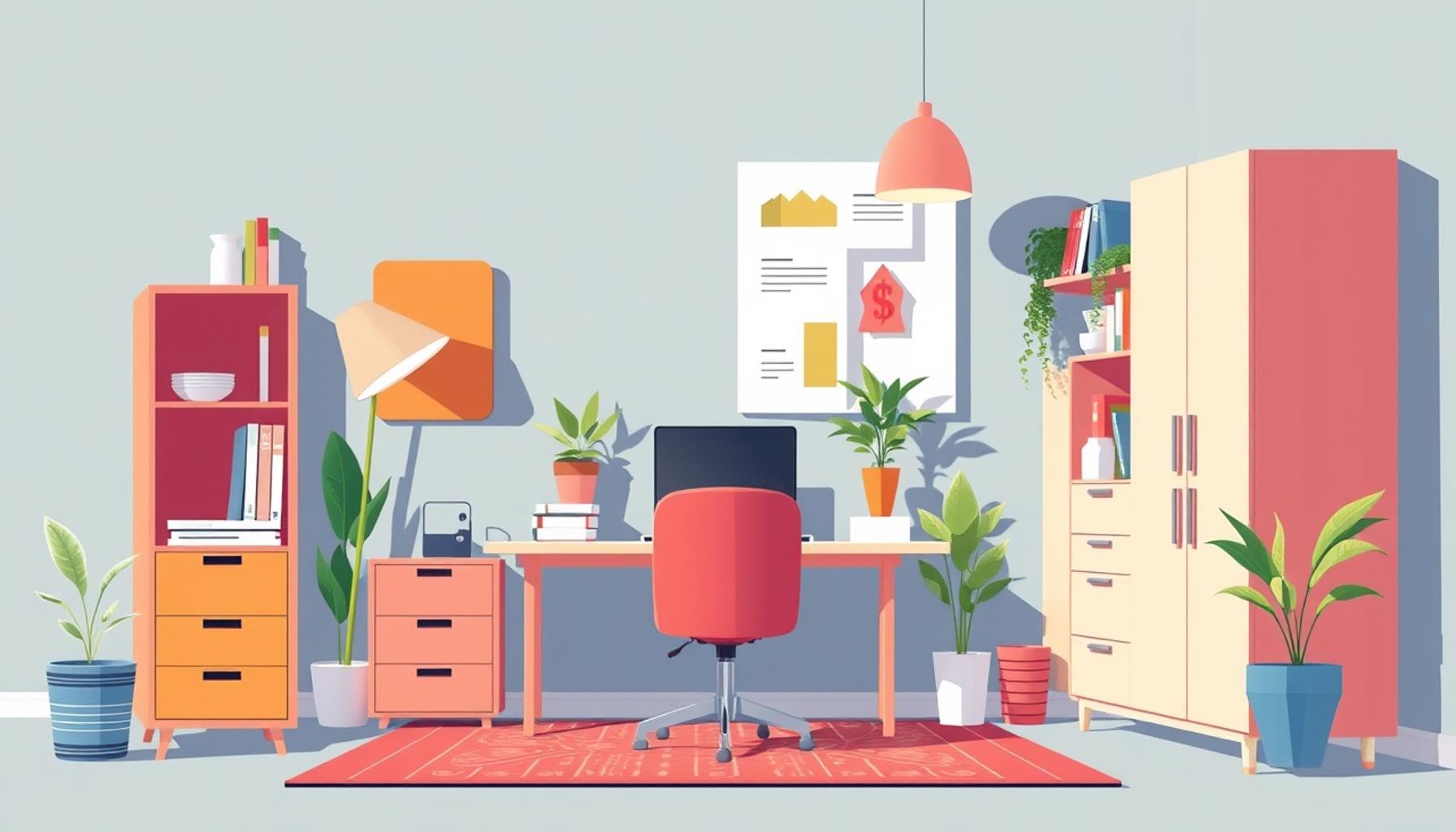
The Impact of Minimalism on Spatial Efficiency: How Fewer Items Can Create More Space
Transformative Aspects of Minimalism
In a world often cluttered with possessions, minimalism offers a refreshing perspective that captivates both proponents and curious onlookers. This lifestyle choice emphasizes the idea that less truly can be more. By curating and simplifying their belongings, individuals can profoundly transform their living spaces into havens of tranquility and focus. As such, minimalism invites us to explore not just the physical realm of our homes, but also the mental space we inhabit.
Understanding Spatial Efficiency
Minimalism transcends mere aesthetics; it is grounded in the principle of spatial efficiency. This approach has several compelling benefits that inspire individuals to rethink their relationship with their belongings:
- Improved Organization: With fewer items, organization becomes clearer, allowing for easier navigation through any space. For instance, a minimalist kitchen may showcase only essential cooking utensils and a handful of tasteful decor, turning cluttered countertops into an oasis of calm.
- Enhanced Functionality: Each item selected in a minimalist approach serves a distinct purpose, thus reducing distractions. A thoughtfully chosen piece of furniture, such as a multi-functional sofa bed, not only maximizes space but also emphasizes intentionality in design.
- Emotional Well-being: A clutter-free environment has been linked to decreased stress levels and increased focus. Research indicates that minimalist spaces can enhance mood by providing a sense of order and simplicity that promotes clarity in our daily lives.
Wider Implications
This focus on spatial efficiency carries broader implications for modern living, particularly in cities where homes are shrinking in size. Embracing a minimalist mindset becomes essential for maximizing available space, allowing city dwellers to create functional areas that feel expansive rather than confining.
Furthermore, minimalism intersects significantly with sustainability. The principle of consuming less aligns with a lower environmental impact, as fewer possessions often lead to reduced waste and more thoughtful purchasing. Many who adopt minimalism find themselves advocating for ethical consumerism, favoring quality over quantity, and seeking products that are crafted to last.
As individuals delve deeper into the principles of minimalism, they are often surprised to discover that fewer items can create more space not only in their homes but in their lives as well. This lifestyle offers an opportunity to detach from materialism and encourages a mindset that values experiences and relationships over possessions. In turn, minimalism fosters a space for personal growth and reflection, allowing us to focus on what is truly important.
In essence, the adoption of minimalism is more than just a trend; it is a movement towards intentional living that has the potential to reshape how we view our environments and ourselves. As we continue to navigate an ever-busy world, the lessons of minimalism stand as a compelling reminder of the beauty and utility of simplicity.
Reimagining Living Spaces: The Role of Minimalism
The paradox of modern living is that despite advancements in urban design and architecture, many American homes are shrinking in size, leading to an urgent need for spatial efficiency. Minimalism serves as a strategic response to this challenge by encouraging individuals to evaluate not just what they own but how their belongings interact with their environment. By stripping down to the essentials, minimalism allows for a significant transformation in perceived space, ultimately fostering both functionality and aesthetics.
Practical Techniques for Achieving Spatial Efficiency
Adopting a minimalist approach involves more than simply decluttering; it requires the implementation of proven strategies that maximize the utility of available space. Here are several practical techniques that effectively align with minimalist principles:
- Declutter Regularly: Regularly purging unnecessary items creates an ongoing habit of mindful consumption. For instance, dedicating just a few minutes each week to assess items can keep your space feeling fresh and expansive.
- Embrace Multipurpose Furniture: Furniture choices can significantly impact the functionality of a space. Investing in items like a sofa that converts into a guest bed or a dining table that doubles as a workspace can save valuable square footage.
- Vertical Storage Solutions: Utilizing wall space for storage, such as shelves or hooks, can free up floor areas typically crowded with furniture or storage bins. This simple technique increases visibility and accessibility while enhancing aesthetic appeal.
In essence, these techniques not only promote spatial efficiency but also encourage a mindset that values quality over quantity in our living environments. By consciously choosing fewer, more impactful items, individuals can create open and inviting spaces that foster creativity and relaxation.
Redefining Value in Personal Spaces
One of the most eye-opening aspects of embracing minimalism is recognizing the shifting paradigm of value in our personal spaces. Traditionally, many Americans define their status and success through ownership and accumulation. However, minimalism urges a reconsideration of how we derive satisfaction from our environments. With fewer items, we are more inclined to invest in higher-quality pieces—be it art, furniture, or decor—that truly resonate with us and stand the test of time. Such choices not only decrease clutter but also enhance the overall aesthetic and emotional quality of our spaces.
Furthermore, minimalism encourages a deeper connection with our environment. As items with personal significance are curated and showcased, every piece chosen becomes a part of a larger narrative that reflects our identity and values. Thus, minimalism is not merely a superficial trend; it represents a profound philosophical shift in how we engage with our surroundings, advocating that fewer items can indeed create more space—both physically and emotionally.
The Transformative Power of Minimalism in Home Design
Embracing minimalism doesn’t just lead to aesthetic changes; it significantly boosts spatial efficiency. When there are fewer items in a space, it creates a sense of openness and tranquility. This aspect is particularly essential in urban environments where living spaces tend to shrink. In essence, adopting a minimalist approach allows individuals to maximize their available space by creating functional areas that serve multiple purposes without visual clutter.Minimalism encourages individuals to evaluate the necessity of their possessions critically. By minimizing the number of decorative items, furniture pieces, and even clothing, one can utilize the freed up space for more meaningful purposes. For example, a small living area can host a comfortable reading nook instead of being overcrowded with excess furniture.Moreover, minimalism promotes better organization. When fewer items are present, it becomes easier to maintain order. This leads to a more stress-free environment that can positively affect mental clarity. Research shows that individuals living in minimalist spaces report higher levels of happiness and reduced anxiety, primarily due to their less cluttered surroundings. In terms of design, minimalist architecture lends itself to maximizing natural light and creating seamless transitions between spaces. Open floor plans and multifunctional furniture not only appeal visually but also expand the perception of space. Elements like sliding doors, built-in storage, and open shelving are key components of minimalism that contribute to enhancing spatial efficiency.Leading further into the advantages of minimalism, it can also be economically beneficial. Owning fewer items means spending less on maintenance and upkeep. This shift not only frees up funds for experiences and investments but also simplifies one’s lifestyle, focusing on quality over quantity. As one delves deeper into the world of minimalism, the impact on spatial efficiency becomes increasingly clear; fewer items indeed create more space for what truly matters—comfort, clarity, and contentment.
| Advantages | Description |
|---|---|
| Enhanced Spatial Perception | A clear and uncluttered space feels larger and more inviting. |
| Improved Organization | Fewer items lead to easier categorization and maintenance of peace. |
| Emotional Well-being | Reduced clutter fosters a serene and focused atmosphere, lowering stress. |
| Cost Efficiency | Less ownership translates to lower expenses associated with maintenance. |
In exploring minimalism’s profound effects, it becomes evident that it extends beyond mere aesthetics; it fundamentally alters how we perceive and interact with our spaces, unlocking the potential of every square foot.
The Psychological Benefits of a Minimalist Environment
Beyond mere physical space, embracing minimalism significantly impacts our mental well-being. When a space is cluttered with excess belongings, it can lead to feelings of chaos and distraction. Numerous studies suggest that an organized environment contributes to improved focus, reduced anxiety, and increased productivity. For example, one study published in the Psychological Science journal indicated that people who worked in tidy environments were more efficient and creative compared to those surrounded by clutter. This aligns perfectly with the minimalist ideal of prioritizing clarity and intention in our spaces.
Mindful Consumption and Its Ripple Effects
Minimalism isn’t solely about removing items; it’s also a philosophy of mindful consumption. This involves making intentional choices about what to bring into our homes, which can deeply influence our buying habits. As individuals begin to recognize the toll that clutter takes on both their physical and emotional spaces, they often gravitate towards sustainably sourced, ethically produced, and multifunctional items. For instance, a trend toward purchasing locally-made goods not only supports small businesses but also promotes a connection with community and sustainability—a core tenet of minimalism.
This shift in consumer behavior not only enhances spatial efficiency but also contributes positively to environmental sustainability. According to the Environmental Protection Agency, Americans generated about 292.4 million tons of trash in 2018, much of which was composed of materials that could be reused or recycled. By choosing to adopt a minimalist lifestyle, we are more likely to invest in fewer, high-quality items that serve a multifaceted purpose, thereby reducing waste and its environmental impact.
Case Studies: Successful Minimalist Transformations
Several real-life examples highlight the profound impact of minimalism on spatial efficiency. Take the case of Fumio Sasaki, a Japanese author and minimalist, whose book, Goodbye, Things, chronicles his journey in reducing his possessions to just a few hundred items. Through this process, Sasaki reported a heightened sense of freedom and clarity, allowing him to allocate time and energy toward things that truly mattered—relationships and personal growth. His experience offers an inspiring narrative that resonates with many seeking escape from the consumer-driven lifestyle prevalent in America.
Another compelling example can be seen in tiny house living, a movement that has gained traction across the United States. Many individuals have traded traditional dwellings for small homes averaging 100 to 400 square feet, thus embracing the minimalist lifestyle to maximize spatial efficiency. Tiny home owners often cite benefits beyond mere physical space; they report decreased financial burdens and increased mobility, allowing them to explore the world while carrying their home with them. The aesthetic simplicity of tiny homes also encourages creative interior design solutions, turning challenging spaces into functional, inviting environments.
Ultimately, these case studies serve as compelling evidence that adopting a minimalist approach not only enhances spatial efficiency but also propels individuals toward a more intentional and fulfilling way of life. As society increasingly grapples with issues of overconsumption and environmental impact, minimalism stands out as a powerful tool for both personal transformation and broader societal change.
Conclusion: Embracing Minimalism for a More Efficient Future
As we have explored throughout this article, the impact of minimalism extends far beyond the simple act of decluttering. The philosophy of minimalism fosters a deeper connection between our living spaces and our inner selves, ultimately leading to enhanced spatial efficiency and improved well-being. By intentionally choosing to keep only what truly matters, we can transform chaotic environments into serene sanctuaries, promoting mental clarity and emotional stability.
Moreover, the ripple effects of mindful consumption encourage a shift in societal values toward sustainability and efficiency. The movement towards ethically sourced and multifunctional items not only benefits individuals but also supports local economies and minimizes waste, contributing to a healthier planet. With each decision to purchase mindfully, we take a step closer to creating a more sustainable future.
Real-life case studies and the rise of trends such as tiny house living further illustrate the profound change that can occur when we let go of excess possessions. Individuals embracing this lifestyle report not only greater financial freedom but also a renewed sense of purpose and mobility. Such transformations serve as powerful testimonials to the benefits of minimalism and inspire many to reconsider their own relationships with belongings.
In conclusion, as we navigate an increasingly crowded world filled with consumer products, minimalism offers a compelling alternative that resonates on multiple levels—personal, societal, and environmental. By understanding and adopting minimalism, we can create spaces that truly reflect our values and aspirations while paving the way toward a future defined by intention and efficiency.

Beatriz
Beatriz Johnson is a seasoned minimalist and writer with a passion for simplifying the complexities of personal organization and intentional living. With over a decade of experience in decluttering strategies and mindful consumption, she specializes in topics like space optimization, habit simplification, and sustainable lifestyle choices. Through her work on our website, Beatriz empowers readers to embrace minimalism, reduce mental and physical clutter, and create more meaningful, organized lives in today's fast-paced world.